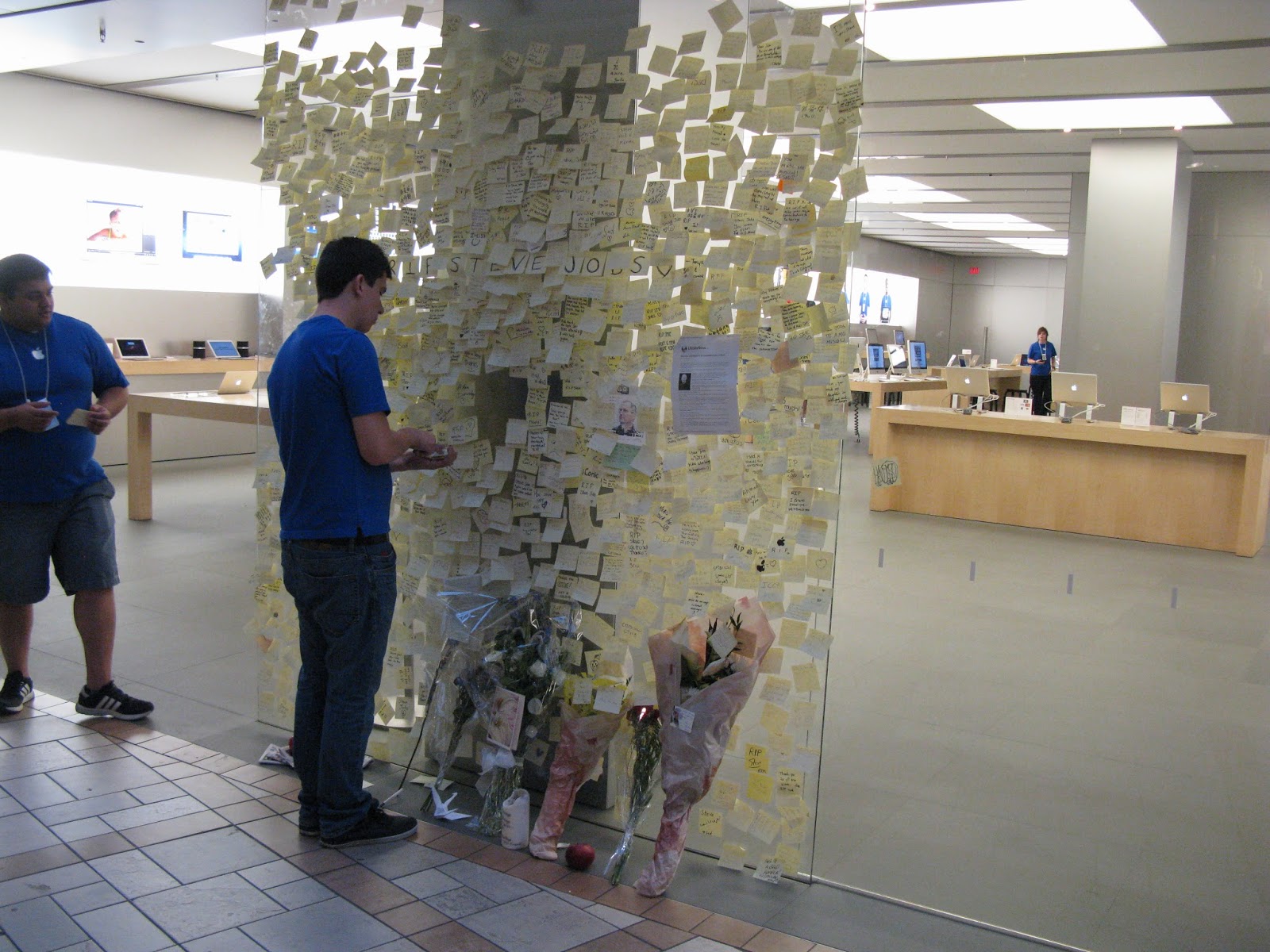
I have come to the pinnacle of success in business. In the eyes of others, my life has been the symbol of success. However, apart from work, I have little joy. Finally, my wealth is simply a fact to which I am accustomed.
At this time, lying on the hospital bed and remembering all my life, I
realize that all the accolades and riches of which I was once so proud,
have become insignificant with my imminent death. In the dark, when I
look at green lights, of the equipment for artificial respiration and
feel the buzz of their mechanical sounds, I can feel the breath of my
approaching death looming over me. Only now do I understand that
once you accumulate enough money for the rest of your life, you have to
pursue objectives that are not related to wealth. It should be something more important: For example, stories of love, art, dreams of my childhood. No, stop pursuing wealth, it can only make a person into a twisted being, just like me.
God has made us one way, we can feel the love in the heart of each of
us, and not illusions built by fame or money, like I made in my life, I
cannot take them with me. I can only take with me the memories that were strengthened by love. This is the true wealth that will follow you; will accompany you, he will give strength and light to go ahead.
Love can travel thousands of miles and so life has no limits. Move to
where you want to go. Strive to reach the goals you want to achieve.
Everything is in your heart and in your hands.
What is the world's most expensive bed? The hospital bed.
You, if you have money, you can hire someone to drive your car, but you
cannot hire someone to take your illness that is killing you. Material things lost can be found. But one thing you can never find when you lose: life. Whatever stage of life where we are right now, at the end we will have to face the day when the curtain falls. Please treasure your family love, love for your spouse, love for your friends... Treat everyone well and stay friendly with your neighbours.
Phil Woods, an alto saxophonist revered in jazz circles for his bright, clean sound and his sterling technique — and widely heard on songs by Billy Joel, Paul Simon and others — died on Tuesday in East Stroudsburg, Pa. He was 83.
The cause was complications of emphysema, Joel Chriss, his longtime booking agent, said.
Mr. Woods was one of the leading alto saxophonists in the generation that followed Charlie Parker, who had set an imposing new bar for the instrument while defining the terms of bebop. Rigorous, complex and brisk, bebop’s stylistic language would be a constant for Mr. Woods throughout his prolific career, as both a leader and a sideman.
For much of that career, he was a sought-after section player in big bands because of his ability, unusual at the time, to read sheet music with as much breezy authority as he brought to his solos. He recorded with the composer-arrangers Oliver Nelson, Michel Legrand and George Russell, among many others, and helped the trumpeter Clark Terry establish his Big Bad Band.
One of Mr. Woods’s early supporters was Quincy Jones, who in 1956 brought him on a State Department-sponsored tour with the trumpeter and bebop pioneer Dizzy Gillespie. Mr. Woods quickly became a Gillespie protégé, and in some respects a surrogate for Parker, Gillespie’s former front-line partner, who had died in 1955.
Parker’s nickname was Bird, and for a while Mr. Woods was known to some, admiringly if a little back-handedly, as “the new Bird.” The association was solidified when he married Parker’s widow, Chan, in 1957. (That marriage ended in divorce.)
On the recommendation of the producer Phil Ramone, an old classmate at the Juilliard School, Mr. Woods was featured on Mr. Simon’s 1975 album, “Still Crazy After All These Years,” playing a quicksilver bebop cadenza on the song “Have a Good Time.” That same year he played a solo on the Steely Dan tune “Doctor Wu.” And in 1977 Mr. Woods was prominently featured on Mr. Joel’s ballad “Just the Way You Are,” which became a Top 10 hit and won two Grammy Awards.
Philip Wells Woods was born on Nov. 2, 1931, in Springfield, Mass. After inheriting a saxophone at age 12, he began taking lessons at a local music shop and discovered that he was a quick study with a gifted ear. His first hero on the alto saxophone was Benny Carter, followed soon thereafter by Johnny Hodges, a star soloist in the Duke Ellington Orchestra, and then Parker.
While still in high school, Mr. Woods often took the bus to New York City, haunting jazz clubs and studying with the pianist-composer Lennie Tristano. He also studied classical music at Juilliard for four years.
He moved to France in 1968, frustrated with a working life dominated by commercial jingles and other work for hire. He found success almost immediately, touring with a band he called the European Rhythm Machine.
After five years, Mr. Woods returned to the United States an accomplished solo artist. From 1974 on, he led a band with the bassist Steve Gilmore and the drummer Bill Goodwin; in recent years the group has also included Brian Lynch on trumpet and either Bill Charlap or Bill Mays on piano.
Mr. Woods also became a mentor to young musicians like the alto saxophonist Grace Kelly, with whom he released an album, “The Man With the Hat,” in 2011.
Mr. Woods won four Grammy Awards, beginning in 1975 with “Images,” an orchestral album he made with Mr. Legrand. In 2007 he was named a National Endowment for the Arts Jazz Master and received a Living Jazz Legend Award from the Kennedy Center.
Mr. Woods, who lived in Delaware Water Gap, Pa., is survived by his wife, Jill Goodwin; a son, Garth; three stepdaughters, Kim Parker and Allisen and Tracy Trotter; and a grandson.
Mr. Woods often declared, with a touch of self-deprecation, that he was more a stylist than an innovator. While he wrote dozens of compositions, they often pointed in the direction of his influences; they include “Charles Christopher” (Parker’s given name) and “All Bird’s Children.”
His final concert, early this month in Pittsburgh, was a tribute to the album “Charlie Parker With Strings.” Backed by a local rhythm section and members of the Pittsburgh Symphony Orchestra, he brought his oxygen tank with him onstage.